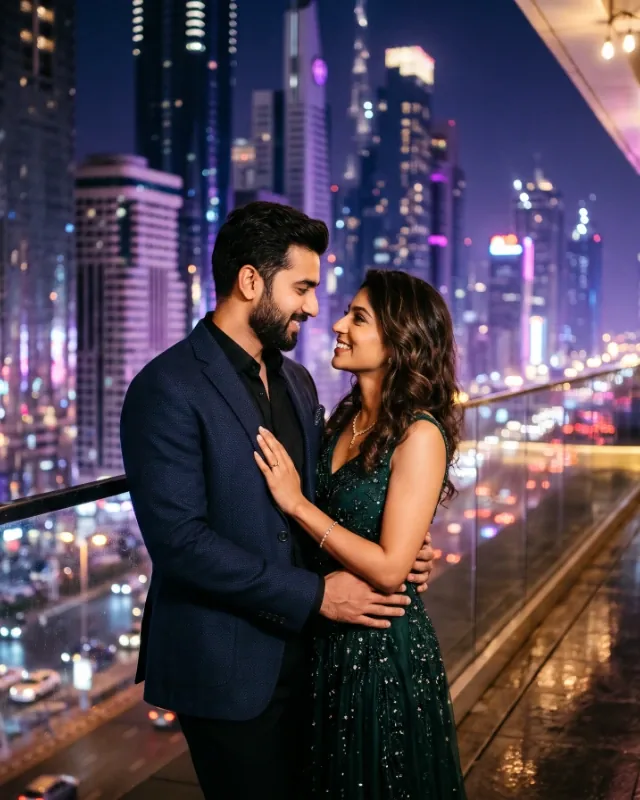
Transform my reference photograph into an exceptionally realistic, elegant royal Indian couple portrait set inside a magnificent Indian palace. Create a sophisticated traditional portrait that celebrates Indian heritage, royal fashion, intricate craftsmanship and natural romantic connection. The final image must look like a professionally photographed couple portrait, not an illustration, painting, fantasy scene or artificial AI-generated image.
**IDENTITY PRESERVATION — HIGHEST PRIORITY**
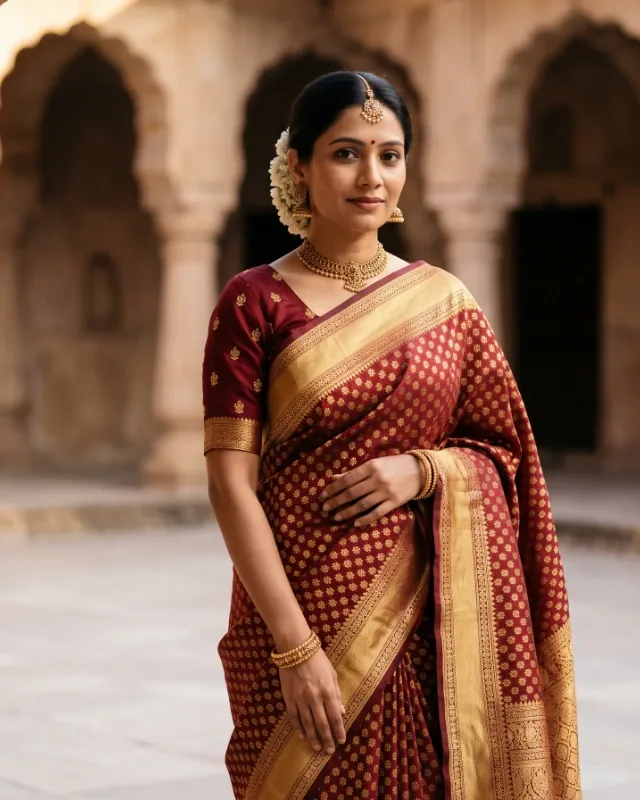
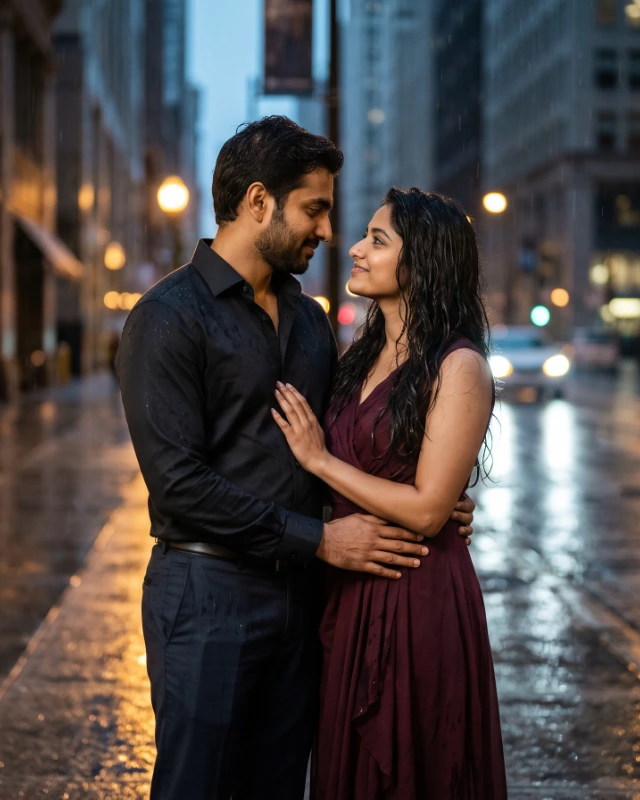
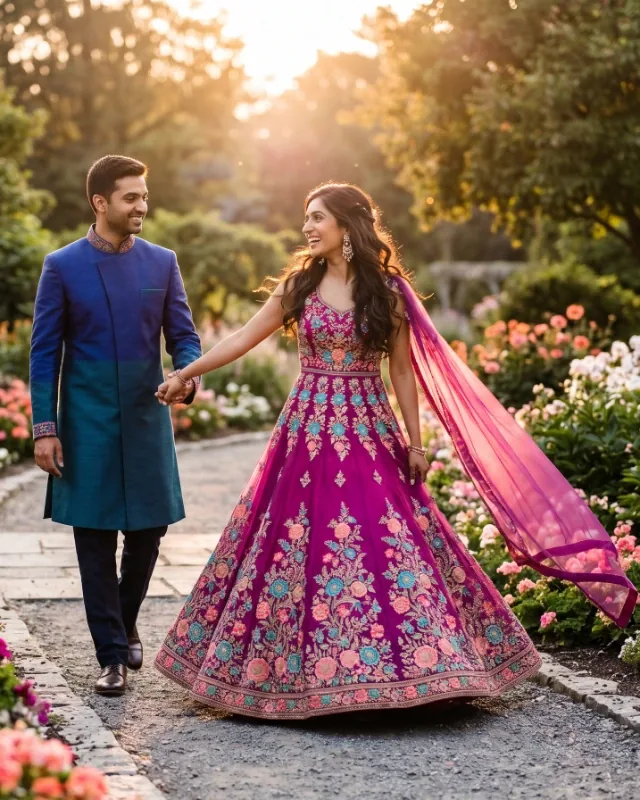
Use the supplied reference photographs to preserve each person's individual facial identity accurately. Keep the man's identity and the woman's identity completely separate and recognisable. Preserve their original facial structure, face shape, eyes, nose, lips, natural complexion, distinctive features and age appearance. Do not blend their facial features, exchange faces, beautify them into different people or replace them with generic models.
Maintain natural skin texture, realistic facial proportions and authentic expressions. Preserve the original hairstyles unless a small adjustment is necessary to complement the traditional clothing naturally.
**SCENE AND PALACE SETTING**
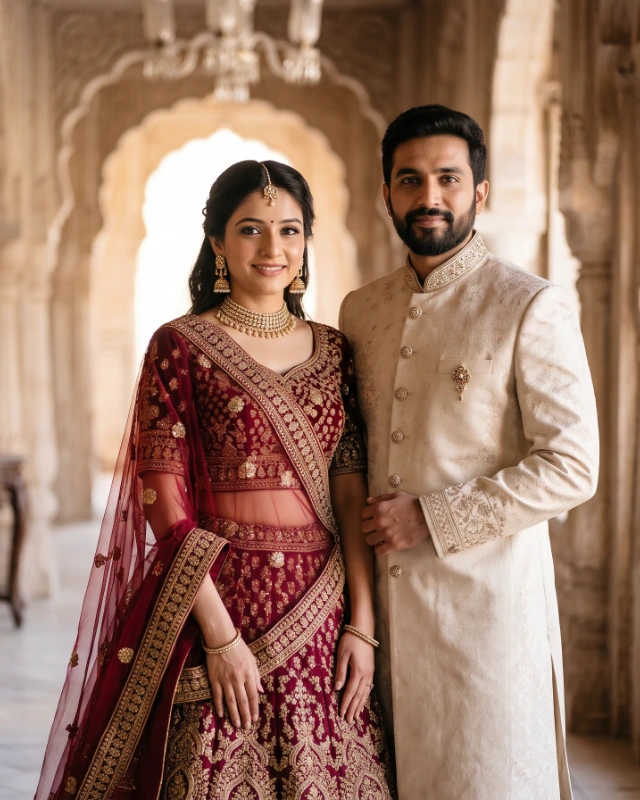
Place the couple inside a magnificent traditional Indian palace with refined royal architecture. The setting features elegant carved stone pillars, intricately decorated arches, warm ivory and sandstone surfaces, subtle antique-gold architectural details and a beautifully maintained palace interior.
Include tasteful traditional architectural elements such as carved jharokha-style windows, ornamental archways, detailed stonework and elegant heritage-inspired decorative features. The background should communicate royal Indian heritage without becoming excessively decorative or distracting.
Use a softly illuminated palace interior with a sense of depth. The architectural details should remain visible but slightly softened behind the couple, creating a refined photographic background. Do not substitute a modern hotel, ordinary living room, outdoor garden, contemporary building or unrelated fantasy castle.
**WOMAN'S OUTFIT – ROYAL EMBROIDERED LEHENGA**
The woman wears an exceptionally elegant royal Indian lehenga ensemble in a rich jewel-tone colour palette. Use deep wine red, burgundy or rich maroon as the primary fabric colour, complemented by intricate antique-gold embroidery.
The outfit consists of a beautifully fitted traditional lehenga blouse, a full-length flowing lehenga skirt and a matching lightweight dupatta. The blouse features refined traditional embroidery, a graceful neckline and elegant sleeve detailing. The lehenga skirt has rich fabric texture, intricate gold threadwork, delicate traditional motifs and a beautifully finished decorative hem.
The dupatta is draped gracefully over one shoulder and arranged naturally around the arm or across the body. Its embroidered border should coordinate with the lehenga without overwhelming the overall design.
The outfit must look like authentic, luxurious Indian bridal-inspired or royal festive attire. Maintain realistic fabric weight, natural folds, accurate embroidery and believable garment construction. Do not turn the outfit into a saree, anarkali suit, western gown or modern evening dress.
**WOMAN'S JEWELLERY AND APPEARANCE**
Complement the lehenga with elegant traditional Indian jewellery, including refined gold or antique-gold jhumka earrings, a coordinated necklace, delicate bangles and a tasteful maang tikka where appropriate.
Keep the jewellery balanced and sophisticated. Every ornament should appear physically realistic and naturally positioned. Avoid excessive oversized jewellery or adding unnecessary decorative accessories.
Her makeup should be elegant and professionally finished while preserving her natural facial identity and complexion. Use softly defined eyes, natural-looking lip colour and subtle highlights. Do not excessively lighten her skin or apply an artificial beauty filter.
Her hair should be styled elegantly, with natural texture and a refined traditional finish. The hairstyle should complement the jewellery and outfit without hiding important facial features.
**MAN'S OUTFIT – TRADITIONAL ROYAL SHERWANI**
The man wears an elegant, perfectly tailored traditional Indian sherwani in a complementary colour such as ivory, champagne, deep maroon or muted gold.
The sherwani features refined traditional embroidery, a structured collar, carefully finished buttons and subtle decorative detailing. Its fabric should appear luxurious, with realistic texture and natural folds.
Pair it with coordinated churidar trousers or traditional formal bottoms. A tasteful pocket detail or subtle traditional accessory may be included where appropriate, but the overall appearance must remain refined and understated.
His outfit must complement the woman's lehenga in colour, texture and formality. Do not dress him in a western business suit, casual shirt, blazer, jeans or unrelated clothing.
Preserve his original hairstyle and facial hair from the identity reference photograph. Do not add a turban unless it is explicitly requested or visible in the supplied reference.
**COUPLE POSE AND EXPRESSION**
Position the couple together as the clear central subjects of the photograph. They should stand naturally close to one another, showing warmth, affection and quiet confidence.
The woman stands slightly forward, with her body turned gently toward the camera. One hand may rest naturally near her waist while the other lightly holds or arranges the dupatta.
The man stands beside her or slightly behind her, with one hand resting gently at her waist or holding her hand naturally. Their body language should feel comfortable, affectionate and authentic.
Both should have relaxed, confident expressions. A gentle smile or a natural, affectionate glance toward each other is preferred. Avoid exaggerated romantic gestures, stiff poses or artificial expressions.
Keep both faces clearly visible. Their hands and arms must have natural anatomy and believable positioning. Do not allow clothing, jewellery or decorative elements to obscure their faces.
**LIGHTING AND COLOUR PALETTE**
Use elegant, soft professional portrait lighting that highlights the couple's faces, traditional outfits and intricate embroidery.
Create a harmonious palette using burgundy, wine red, antique gold, champagne, ivory, warm beige and subtle sandstone tones. The palace environment should provide a rich but restrained heritage atmosphere.
Use soft directional illumination, gentle shadows and natural highlights. Maintain accurate skin tones and realistic exposure. The gold embroidery and jewellery should have natural metallic reflections rather than excessive artificial shine.
Avoid strong yellow colour casts, harsh flash, excessive glow, oversaturated colours and dramatic fantasy lighting.
**CAMERA, COMPOSITION AND PHOTOGRAPHIC STYLE**
Create a vertical 4:5 portrait suitable for Instagram and other social-media platforms.
Use a professional portrait-photography perspective, approximately equivalent to an 85mm portrait lens at a natural eye-level camera position. Frame the couple from approximately the knees upward or as a balanced three-quarter portrait, allowing the lehenga and sherwani to remain clearly visible.
Keep the couple centrally positioned with sufficient breathing room around their heads and shoulders. Include enough palace architecture to establish the royal setting without making the background more prominent than the subjects.
Use realistic depth of field with the couple sharply focused and the palace background softly defined. Preserve fine facial detail, natural skin pores, individual hair strands, authentic fabric texture, accurate embroidery and realistic jewellery.
The final image should resemble a premium Indian fashion and portrait photography session captured inside a real heritage palace.
**STRICT VISUAL CONSISTENCY**
Maintain the woman's royal lehenga ensemble, including the blouse, flowing skirt, dupatta and coordinated embroidery. Do not convert the outfit into a saree, anarkali suit or western gown.
Maintain the man's traditional sherwani and coordinated formal attire. Do not replace it with casual or western clothing.
Keep both people's facial identities accurate and independent. Do not alter their natural complexion, age appearance or distinctive facial features.
Keep the palace environment consistent with traditional Indian heritage architecture. Do not replace it with a modern hotel, generic ballroom or fantasy castle.
Preserve realistic human anatomy, natural hands, correct fingers, believable body proportions and physically plausible clothing.
**NEGATIVE PROMPT**
Different people, altered identities, blended faces, exchanged faces, generic AI faces, changed facial structure, excessively beautified faces, unnatural skin lightening, artificial skin texture, plastic skin, heavy beauty filters, distorted eyes, asymmetrical facial features, unnatural smiles, exaggerated expressions, malformed hands, extra fingers, missing fingers, fused fingers, extra arms, duplicated people, distorted body proportions, stiff posture, awkward embrace, obscured faces, incorrect clothing construction, saree, saree pallu, saree pleats, anarkali suit, western gown, evening dress, casual shirt, business suit, jeans, incorrect jewellery, oversized accessories, missing dupatta, poorly rendered embroidery, random fabric patterns, unrealistic metallic reflections, modern hotel, bedroom, garden, outdoor city setting, fantasy castle, European palace, cluttered background, cartoon, painting, illustration, CGI, 3D rendering, excessive yellow colour grading, oversaturation, harsh flash, excessive glow, artificial lens flare, extreme background blur, wide-angle distortion, low resolution, blurry faces, unnatural fabric folds, watermark, signature, distorted text.
**REFERENCE IMAGE GUIDANCE**
Use the supplied individual identity reference photographs to preserve each person's face independently. If a separate couple or composition reference is supplied, use it only as guidance for the desired pose and framing, not as a replacement for either person's facial identity.
If the image-generation platform supports separate identity-reference controls, assign each person's photograph to the correct person. Keep reference assignments consistent throughout generation.
**GENERATION SETTINGS – OPTIONAL**
If supported by the selected image-generation platform, use a high identity-reference strength, strong prompt adherence and low stylisation. Keep the same model version, reference images and aspect ratio when creating variations intended to maintain a consistent visual result.
A fixed seed or numerical reference-strength setting is optional and should only be used when the selected platform supports it. Do not assume that every image generator provides identical controls.
The final result must be a beautiful, believable and culturally recognisable royal Indian couple portrait, with both individuals remaining unmistakably themselves.